
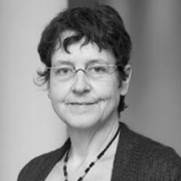
Bettina Haussmann
|
|
Bettina I.G. Haussmann (Apl.Prof.Dr.) West Africa Liaison Scientist for the McKnight Foundation Global Collaboration for Resilient Food Systems (CRFS) Program Email: b.haussmann(at)ditsl.org Phone: +49 162 7080829 |
||
| Training | Bettina Haussmann studied Agricultural Biology at University of Hohenheim, Stuttgart, Germany. In 1994, she obtained her PhD at Hohenheim University, with the research focusing on sorghum breeding for semi-arid areas of Kenya. The topic of her post-doctoral research was sorghum resistance to the parasitic weed Striga hermonthica in Mali and Kenya.This research led to the habilitation and venia legendi in plant breeding obtained at Hohenheim University in 2004. | ||
| Career | Until now,Bettina Haussmann maintains her private lecturer/extraordinary professorship (Apl. Prof.) status at the Institute of Plant Breeding, Seed Science and Population Gene¬tics of Hohenheim University.After her habilitation, Bettina Haussmann worked for six years (2005-2011) as pearl millet breeder for West and Central Africa, based at the International Crops Research Institute for the Semi-Arid Tropics (ICRISAT) in Niger. Since 2011, she serves as West Africa Liaison Scientist for the McKnight Foundation Global Collaboration for Resilient Food Systems (CRFS) Program in 50% of her time, managing a project portfolio of about 20 projects in Niger, Burkina Faso and Mali. Since 2013, she works also part-time (50%) as Development Cooperation Manager at the German Seed Company KWS SAAT SE & Co. KGaA, with a focus on Capacity Development projects in Ethiopia and Peru, and more recently, public-private partnership development in Kenya and Zambia. Due to her part-time work with the KWS, she brings a unique private sector experience and perspective to the table.B.Haussmann served on the External Advisory Board of the Sorghum and Millet Innovation Lab (SMIL) from 2013 to 2023, and is part of the CGIAR Consultant Roster since 2021, and is involved (2023) in the external evaluation of the IAVAO (Innovation and plant breeding in West Africa/”Innovation et Amélioration variétale en Afrique de l’Ouest”) partnership. |
|
|
| Research | Haussmann’s main research interests are plant genetic resources conservation and use, crop improvement and seed systems targeting smallholder farmers in the tropics. Focus crops in her own research were sorghum and pearl millet, and to a lesser extent barley and quinoa. In addition to plant breeding, due to her work with the McKnight Foundation, she is engaged in agroecological transition approaches, systems thinking, farm-and landscape approaches, farmer-centered research,Farmer Research Networks, Research-for-Development and “Development-for-Research” approaches.Her heart beats for African smallholder farmers and her professional aim has always been to contribute to improving their lives through joint research. Diversity, Equity and inclusion are core values in her research. |
||
| Experience abroad |
Long-term: During her professional career, B. Haussmann lived in Zimbabwe (3 months), Kenya (2 years), Mali (4 years), and Niger (6 years). Short-term research stays happened in Nigeria, Niger, Burkina Faso, Mali, Senegal, Ethiopia, Peru, Kenya and Zambia |
||
| Current Research Projects | • McKnight CRFS West Africa Community of Practice • Seeds for Zambian Incomes and Livelihoods (SeZIL) • Single-cross hybrid prediction using distinct mating designs for sorghum product development in East Africa. |
||
|
Teaching <![endif]--> |
As Apl. Prof. at University of Hohenheim, B. Haussmann contributes lectures on plant genetic resources conservation and use, aspects of crop improvement in the tropics, and planning of breeding programs. She also supervises MSc and PhD students in the field of plant breeding for the tropics. |
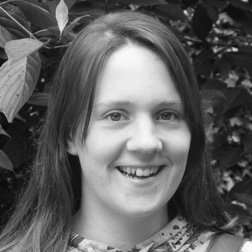
Mareike Aufderheide (MSc)
 |
Research Associate Email: Diese E-Mail-Adresse ist vor Spambots geschützt! Zur Anzeige muss JavaScript eingeschaltet sein! |
| Training | Mareike Aufderheide-Voigts studied organic agriculture (BSc) and sustainable international agriculture (MSc) at the universities of Kassel/Witzenhausen and Göttingen. She finished her Master’s Degree in February 2015. |
| Career | Mareike Aufderheide-Voigts gathered experience in practical agriculture on a number of farms in Australia before starting her studies in Witzenhausen. During her studies she worked as a research assistant, first with the agroecology department and then with the DITSL. She has been member of their staff since 2012. Since 2015 she is working as Evaluation Officer and County Coordinator with CERES GmbH, a company for international organic certification. Since 2016 she is also working practically in dairy processing and cattle management on a farm in Namibia. |
| Research | Her main research interest is in social systems as well as in livestock based land-use systems. She is also interested in research about methods for coexistence of predators and livestock. MSc Thesis: Reproductive performance and modelled herd development of cattle kept by Borana pastoralists in Southern Ethiopia BSc Thesis: Working Conditions of Pastoralists and Employed Herders on Ranches from their own Perspective. A Case Study in Samburu and Laikipia District, Kenya. |
| Experience abroad |
Mareike Aufderheide-Voigts has long-term experience in Australia, Kenya and Namibia. She also has short term experience in South Africa, Switzerland and Belgium. |
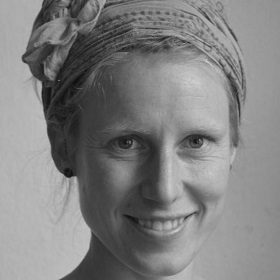
Esther Mieves
 |
Research Associate Email: Diese E-Mail-Adresse ist vor Spambots geschützt! Zur Anzeige muss JavaScript eingeschaltet sein! |
| Training | Esther Mieves finished her apprenticeship as horticulturalist for ornamental plants in 2006. She went on to study Horticulture (BSc) at Dresden University of Applied Science (HTW), completing in 2011. Currently, she is working towards an MSc in Sustainable International Agriculture, in the field of Organic Agriculture at Georg-August-University of Goettingen and University of Kassel. |
| Career | During 2012, Esther worked in the Department of Crop Science (Section Crop protection) in the Research Institut of Organic Agriculture (FiBL) in Frick, Switzerland. Alongside her current MSc studies, Esther works as a guide, educating public visitors, scholars and students in the Tropical Greenhouse of the University of Kassel (Witzenhausen). In 2015, Esther co-founded the registered association „Solidarische Landwirtschaft Freudenthal e.V.“ and worked in this community supported agriculture (CSA) scheme as a horticulturist. |
| Research Interests |
Still interested in organic and community-based agriculture, Esther is currently expanding her knowlegde of social science concepts and methodologies through her research on the impact of socio-cultural factors on outcomes of different innovations implemented by small-scale farmers in Tanzania. |
| Experience abroad |
In 2006, Esther undertook independent travel to Senegal by bus, working for 4 months with a project in Casamance today known as „Sasarale e.V.“ In 2007, she again combined travel and work in India and Sri-Lanka, and in 2015, participated in an „Interdisciplinary Study Tour to Myanmar“. She will conduct her MSc fieldwork in rural Tanzania in February-March 2016. |
Katharine Tröger (MSc ETH Food and Resource Economics)
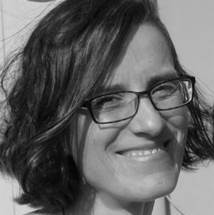 |
PhD Student Email: Diese E-Mail-Adresse ist vor Spambots geschützt! Zur Anzeige muss JavaScript eingeschaltet sein! Phone: +49 (0) 5542 607 24 |
| Education | Katharine Tröger specialised in Organic Agricultural Sciences for her undergraduate studies at the University of Kassel, where she was awarded the Gustav-Hacker and the VDI Award (2007). She then received her MSc in Food and Resource Economics from the Eidgenössische Technische Hochschule (ETH) in Zurich, Switzerland and was awarded the Willi Studer Prize for her MSc (2011). In 2011 she completed a one-year postgraduate training for International Development Cooperation at the Seminar für Ländliche Entwicklung (SLE) of the Humboldt University in Berlin. |
| Career | Katharine Tröger has completed several agricultural internships and worked as a student research assistant during her university studies. The SLE training included a commissioned study by KfW Entwicklungsbank to develop an impact-oriented framework and manual for Monitoring and Evaluation of a rural electrification project in the West Nile, Uganda. Prior to joining the RELOAD project as a PhD student, she worked as a Project Manager in Rwanda for two years on a project, funded through the International Climate Initiative of BMUB and administered through the University of Koblenz-Landau, that established 6500 ha of agroforestry systems. |
| Researchs |
Focusing on pineapple value chains in Uganda, her PhD research uses participatory methods and a system learning approach to address post-harvest losses and encourage local innovation. The topic of post-harvest losses builds on her research experience during her undergraduate studies which assessed losses in onions and tomatoes in Niger. Systems thinking influenced her MSc thesis titled, “Farmers Preferences for Brands and Varietal Attributes and the Adoption of Hybrid Maize Varieties in Malawi”. |
| Experience Abroad |
Kenya, Niger, Malawi, Rwanda, Uganda. |
- Aktuelle Seite:
-
Startseite

-
English content
- Team & Contact



 NaviNut