Anja Christinck (Dr. sc. agr.) †
 |
Senior Scientist |
|
Our long-time friend, companion and colleague Dr. Anja Christinck passed away on 19.08.2022.
|
|
| Training | Anja Christinck studied agricultural sciences at the Universities of Göttingen and Hohenheim (1986-1992). She specialised in plant production with a focus on soil sciences, organic and tropical farming systems, and later shifted to agricultural communication and extension science. She holds a doctoral degree in agricultural social sciences from the University of Hohenheim (2002). |
| Career | From 1993-94, she worked as a research assistant at the Institute of Plant Production in the Tropics and Subtropics, University of Hohenheim. From 1994-1997, she was a team leader in a social education project focusing on organic farming and cheese production in central Germany. From 1996-1999, she joined a collaborative project on plant breeding, seed and agrobiodiversity issues involving various stakeholders in Rajasthan, India, and subsequently worked as a freelance consultant and researcher for nearly 15 years, before joining DITSL as a senior scientist in May 2013. |
| Experience abroad | Since 1988, Anja Christinck has worked in various countries, mainly in India, Ecuador and Colombia. |
| Research |
Her current research interests include methodologies for dialogue and joint learning of scientists and non-academic stakeholders in research projects, particularly in relation to plant breeding, seed and agrobiodiversity issues, and more generally to food and nutrition security and sustainable rural development. |
| Current Research Projects |
|
| Teaching |
|
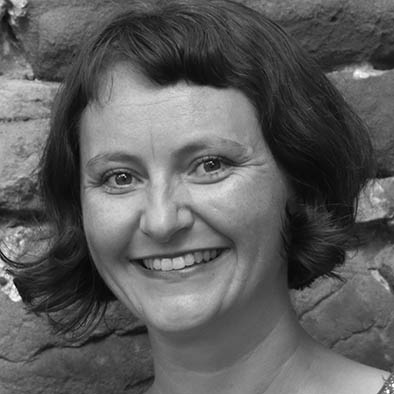
Margareta Amy Lelea (PhD Geography)
 |
Senior Scientist Email: Diese E-Mail-Adresse ist vor Spambots geschützt! Zur Anzeige muss JavaScript eingeschaltet sein! |
| Training | Margareta Amy Lelea completed her PhD in Geography in 2009 with a designated emphasis in Feminist Theory and Research from the University of California, Davis (UCD). She completed her MSc in Geography in 2005 and her BSc in International Agricultural Development in 2000 also from UCD. |
| Career | Margareta Lelea has been working with the German Institute for Tropical and Subtropical Agriculture since 2013 and the Agricultural and Biosystems Engineering Department of the Faculty of Organic Agricultural Sciences at the University of Kassel since 2015 through which she has contributed to multiple transdisciplinary European-African research projects emphasizing improved collaboration and coordination with multiple agri-food value chain stakeholders – including commodities (maize milk, pineapple, and pastoral meat), and underutilized species (African Locust Bean and Cocoyam/Taro). In 2019, she co-founded the Perspectives on Pastoralism Film Festival (https://www.pastoralistfilmfestival.com/) as part of the Coalition of European Lobbies for Eastern African Pastoralism (https://www.celep.info/). Currently, she is part of a Working Group on “Pastoralism and Gender” for the United Nations’ International Year of Rangelands and Pastoralism 2026 (https://iyrp.info/). From 2012-2015, she served as the Chair of the Communications Committee for the Rural Geography Specialty Group of the Association of American Geographers. From 2011-2013 she worked as a Post-Doctoral Researcher with the Department of Entomology, University of California, Davis (UCD) on a project entitled, ‘Community Perceptions of Emergency Responses to Invasive Species in California’. From 2009-2010, she was a Visiting Assistant Professor at Bucknell University in Pennsylvania where she taught Geography. As a graduate student researcher at UCD (2002-2003; 2005-2009), she contributed to program coordination for the Gender and Global Issues Program (GGI) and then the Consortium for Women and Research. During this time, she co-founded the Davis Feminist Film Festival that continues to be organized annually through the Women’s Resources and Research Center. This festival was started as a fundraiser for GGI’s international internship program through which she mentored students to develop their own projects to complement the work of non-profit organizations in Romania, China, India and Mexico. She assisted in the development and coordination of a Post-Baccalaureate Certificate Program in Gender and Global Issues that offered continuing education through UCD Extension. With funding from the National Science Foundation and later as a U.S. Fulbright Junior Scholar to Romania, she conducted research that culminated in her doctoral dissertation: ‘On the Margins of the European Union: A feminist geography of changing livelihood strategies in Romania’s Western Borderlands, 1999-2005’. |
| Experience abroad | USA, Romania, Serbia, Kenya, Uganda, Ethiopia, Tanzania, Nigeria, Ghana, and Thailand |
| Research |
As a human geographer, and more specifically a feminist geographer, focused on gender, livelihoods, and agriculture, Margareta Lelea engages in action research methodologies as part of a transdisciplinary approach to cultivate increased collaboration between diverse stakeholders whose activities make up food chains; from growing food to eating food. She seeks to democratize knowledge production through the facilitation of participative processes focused on learning that allow context-specific social innovations to emerge. She focuses on issues of inclusion and exclusion and how to leverage cooperation to create more ecologically-oriented and socially equitable agriculture and food systems. Collaborative Project Land Management Sub-Saharan Africa: Increasing efficiency in rangeland-based livestock value chains through machine learning and digital technologies (InfoRange) |
| Completed Projects |
“Social Sciences: Knowledge, collaborative learning and action” within the GlobE project ReLOAD: Reduction of Post Harvest Losses and Value Addition in East African Food Value Chains - funded by the Bundesministerium für Bildung und Forschung (BMBF) in cooperation with the Bundesministerium für wirtschaftliche Zusammenarbeit (BMZ).
|
| Teaching | At DITSL, Margareta Lelea co-supervises MSc and PhD students. At the University of Kassel, she taught “Social Context of Technical Innovations in Agri-Food Systems”. At Bucknell University in Pennsylvania, she taught ‘Introduction to Human Geography’, ‘Political Geography’, ‘Cultural Geography’, ‘Europe in an Era of Globalization’ and ‘Gender and Geography’. At California State University, Chico, she taught ‘Introduction to Women and Gender Studies’ and at West University, Timisoara she co-taught the first ‘Gender and Geography’ course ever offered in Romania and assisted with Rural Geography. |
Pamela Ngwenya (PhD Geography)
 |
Post-Doctoral Researcher Email: Diese E-Mail-Adresse ist vor Spambots geschützt! Zur Anzeige muss JavaScript eingeschaltet sein! |
| Training | Pamela Ngwenya studied Geography at the Universities of Edinburgh and Oxford. She completed her doctorate at the University of Oxford Centre for the Environment in 2009 with a thesis entitled ‘The Ethical Geographies of Caribbean Sugar’. Her research addressed the ethics and politics of Caribbean sugar traded under Europe's 'Sugar Protocol' agreement and drew upon a diverse set of ethical philosophies, qualitative research methods and empirical data. She is also a Participatory and Community Video facilitator. |
| Career | From 2010-14, Pamela was an Andrew Mellon scholar and then Postdoctoral Fellow in the School of Built Environment and Development Studies at the University of KwaZulu-Natal, primarily focused on research and writing. She undertook an action research project in Zimbabwe on the subject of sustainable agro-food initiatives with an emphasis on public-oriented multi-media outputs. As part of the Fellowship, she also worked with the Centre for Civil Society to establish a community video resource, running workshops with over 100 community-based trainees. Over the past 8 years, Pamela has also managed and implemented several film projects and video training programs with youth, farming and women’s groups in the UK, the Caribbean and Southern Africa. |
| Experience abroad | Lived and/or undertaken research in Zimbabwe, South Africa, Botswana, Tanzania, Barbados, Jamaica, St Kitts, U.S.A. |
| Research | As a geographer, Pamela is interested in the inter-relations of social and material worlds, and has a wide range of research interests including agri-food studies, feminist geography, collaborative methodologies and bio-philosophies. She is currently collaborating on the Trans-SEC project in Tanzania, with a focus on participation, gender and socio-cultural patterns of difference. Her PhD research explored the ethical dimensions of an agri-food network and developed innovative modes of enquiry, including video methods, which sought to deepen attention to situated knowledges, embodiment and ecological agencies. Building on this, her postdoctoral studies in Zimbabwe focused on (1) the relations between socio-ecological imagination and transformative practice, and (2) participatory video as a tool for visioning the future, whilst developing public-oriented multi-media outputs as a form of scholar-activism. |
| Current Research Projects | Gender and socio-cultural differences in participative stakeholder systems and knowledge transfer within the GlobE project Trans-SEC: Innovating Strategies to safeguard Food Security using Technology and Knowledge Transfer: A people-centred Approach - funded by BMBF. Social Sciences: Knowledge, collaborative learning and action” within the GlobE project ReLOAD: Reduction of Post Harvest Losses and Value Addition in East African Food Value Chains - funded by BMBF |
| Teaching | At DITSL, Pamela Ngwenya is involved in co-supervision of MSc and PhD students. At the University of KwaZulul-Natal, she lectured on ‘Sustainable Cities and Development’ and as a PhD student at the University of Oxford, she tutored social geography and ran a Masters reading group on embodied geographies. She has considerable experience with facilitating the practical learning of video production skills in community contexts. |
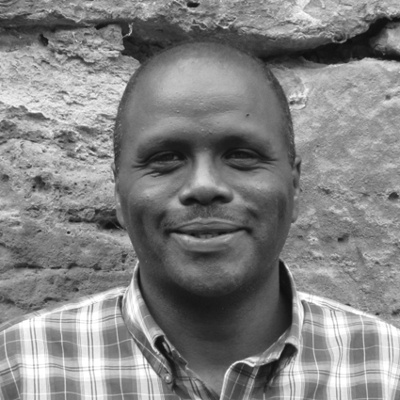
Guyo Malicha Roba (MSc Energy Policy)
 |
PhD Student Email: Diese E-Mail-Adresse ist vor Spambots geschützt! Zur Anzeige muss JavaScript eingeschaltet sein!; Diese E-Mail-Adresse ist vor Spambots geschützt! Zur Anzeige muss JavaScript eingeschaltet sein! |
| Training | Guyo studied Bsc Environmental Planning and Management degree at the Kenyatta University (Kenya) and masters degree in Energy Policy from the University of Dundee (United Kingdom). |
| Career | Prior to joining the German Institute for Tropical and Subtropical Agriculture (DITSL), at the Faculty of Organic Agriculture, University of Kassel, Guyo gained over six years of interdisciplinary work experience at both the International Union for Conservation of Nature (IUCN) and The Kenya Institute for Public Policy Research and Analysis (KIPPRA) which have primed him to engage in policy research and engagement of multiple stakeholders in policy and natural resource arena. He served as a senior programme officer in the drylands programme, where he was responsible for programme management, working with different actors from the local communities, and as a part of a regional platform for policy and practice change. In his research he builds on his drylands expertise, and work experience to advance the academic knowledge frontier, and contribute to the practitioner world through transdisciplinary action research among pastoral community of Northern Kenya. |
| Research | His main research interest is on Socio-ecology of Pastoral systems, multi-actor governance, and interaction processes in complex food value chain, global food futures, and environmental change among others. He is undertaking his research on “using multi-actor approaches for collaborative learning in pastoral meat value chains in Northern Kenya”, under the project funded under a Global Food Security programme (BMBF GlobE), titled “Reducing Losses and Adding Value in East African Food Value Chains (ReLOAD)”. The PhD research particularly looks at the value chain actors, their activities and needs with the final aim of identifying options for improving actors´ interaction, flows (information and products) and influence coordination in the pastoral meat value chain. |
- Aktuelle Seite:
-
Startseite

-
English content
- Team & Contact



 NaviNut